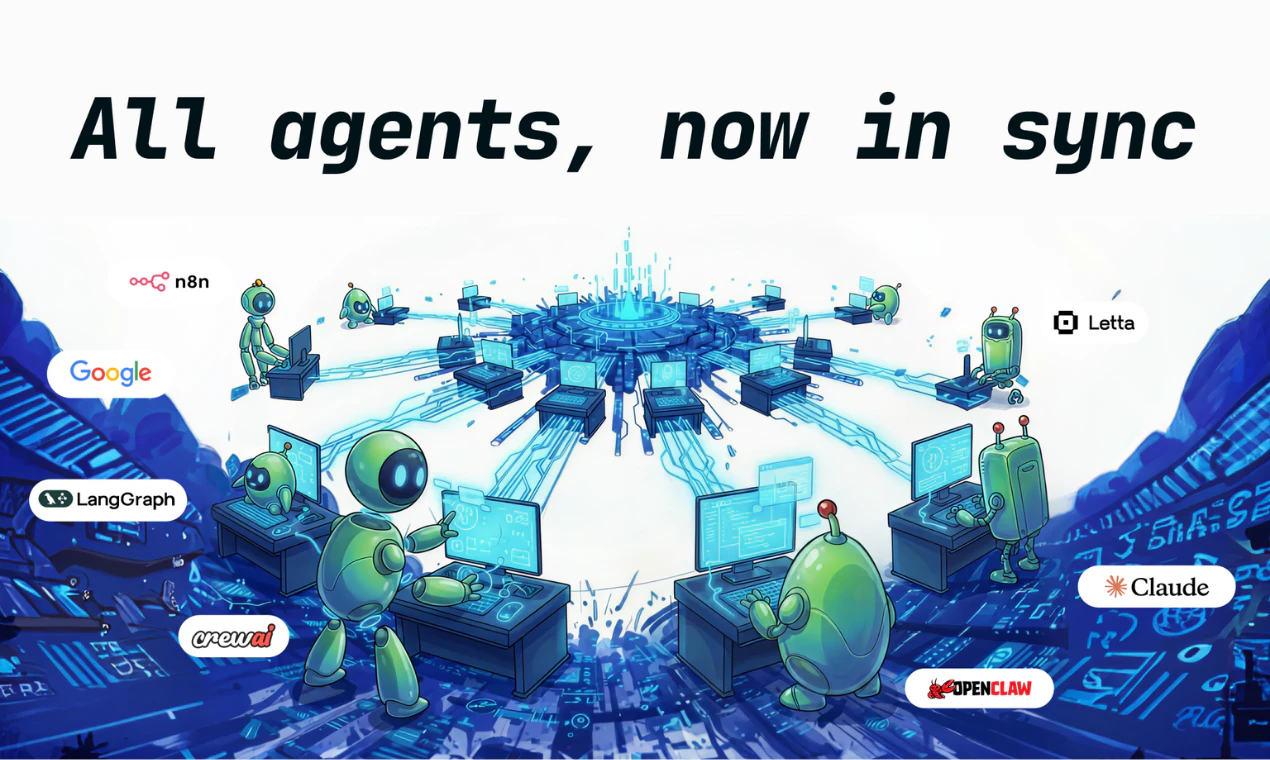
BAND: The Future of Orchestrating Multi-Agent Workflows
Coordinate and govern multi-agent work in a single chat
Published: 4/24/2026
In an era where organizations are rapidly deploying diverse AI agents to handle specialized tasks, the primary challenge has shifted from "how do we build an agent?" to "how do we get these agents to work together?" BAND arrives as a sophisticated solution to this fragmentation. It is an interaction-layer platform designed to coordinate and govern communication between autonomous AI agents and human teams within a unified chat interface.
At its core, BAND serves as the connective tissue for distributed AI systems. Instead of treating agents as isolated silos, BAND creates a structured, shared environment where multiple agents—and the humans overseeing them—can exchange information, delegate tasks, and maintain a consistent context. It is built for engineering teams, product managers, and operations leaders who are struggling to manage the complex, often chaotic "agent sprawl" that occurs when scaling AI deployments.
Solving the "Agent Silo" Dilemma
As the agentic AI landscape matures, many companies find themselves with a variety of agents built on different frameworks, each operating in its own vacuum. This leads to broken workflows, contradictory outputs, and a lack of transparency. Existing orchestration tools often focus on the execution of the agent (the "how"), but they rarely address the governance of the interaction (the "why" and "who").
BAND fills this critical market gap by focusing specifically on the interaction layer. It treats AI-to-AI and human-to-AI communication as a governed protocol. By providing a centralized chat-based environment, BAND ensures that when agents need to collaborate, they are doing so within a defined set of rules, permissions, and oversight structures. This makes scaling AI operations not just possible, but reliable.
Key Features and Highlights
BAND differentiates itself by prioritizing visibility and control in what is traditionally a "black box" environment. Some of its most notable capabilities include:
- Unified Interaction Layer: A single, intuitive chat-based interface that aggregates activity from diverse AI agents, effectively becoming the "control room" for your multi-agent architecture.
- Built-in Governance: Granular control over how agents interact with one another. You can define communication protocols, restricting agents to specific data sets or peer-to-peer relationships to prevent hallucination-induced drift.
- Human-in-the-Loop Integration: Seamlessly bridges the gap between machine logic and human judgment. If an agent hits a threshold that requires human intervention, the chat interface facilitates a smooth handoff, keeping the audit trail intact.
- Reduced Fragmentation: By standardizing the communication protocol, BAND eliminates the need to build custom middleware to help Agent A speak to Agent B, significantly reducing technical debt.
The user experience is clean and purposeful; it feels familiar to anyone who has used team collaboration tools, but with an underlying engine designed to handle machine-speed communication alongside human-speed decision-making.
Potential Drawbacks and Areas for Improvement
While BAND is a powerful utility, it is not without its limitations. For teams that have already heavily invested in proprietary internal orchestration platforms, migrating to BAND may represent a significant structural shift. Additionally, for smaller startups or early-stage pilots, the overhead of setting up governance protocols might feel like "over-engineering."
To further improve the product, I would look for:
- Expanded Integration Ecosystem: While the core functionality is strong, deeper pre-built connectors for popular LLM providers and agent-frameworks (like LangChain or AutoGen) would lower the barrier to entry.
- Advanced Analytics Dashboards: While the chat interface is great for real-time collaboration, adding a high-level analytics layer to visualize agent interaction frequency and failure rates would provide managers with better ROI data.
Bottom Line and Recommendation
BAND is a must-try for organizations that have moved past the "one agent" experiment phase and are now dealing with the complexity of multi-agent systems. If your current workflow involves agents sending disparate emails, Slack messages, or database pings that are impossible to track, BAND provides the structure and oversight required to scale effectively.
By prioritizing governance over simple orchestration, BAND creates a more reliable, manageable environment for AI teams. It transforms AI from a series of disjointed experiments into a unified, professional-grade workforce. For teams looking to build a robust foundation for their AI strategy, BAND is an essential addition to the stack.
Featured AI Applications
Discover powerful tools to enhance your productivity
MindMax
New Way to Interact with AI
Beyond AI chat, transforming conversations into an infinite canvas. Combining brainstorming, mind mapping, critical and creative thinking tools to help you visualize ideas, solve problems efficiently, and accelerate learning.
AI Slides
AI Slides with Markdown
Revolutionary slide creation fusing AI intelligence with Markdown flexibility - edit anywhere, optimize anytime, iterate easily. Turn every idea into a professional presentation instantly.
AI Markdown Editor
Write Immediately
Extremely efficient writing experience: AI assistant, slash commands, minimalist interface. Open and write, easy writing. ✍️ Markdown simplicity + 🤖 AI power + ⚡ Slash commands = Perfect writing experience.
Chrome AI Extension
AI Assistant Anywhere
Transform your browsing experience with FunBlocks AI Assistant. Your intelligent companion supporting AI-driven reading, writing, brainstorming, and critical thinking across the web.