Modo Review: Bridging the Gap Between Text Concepts and Buildable Hardware Prototypes
Turn a hardware idea into a buildable prototype
Published: 1/21/2026
Product Overview: Conceptualizing Hardware into Reality
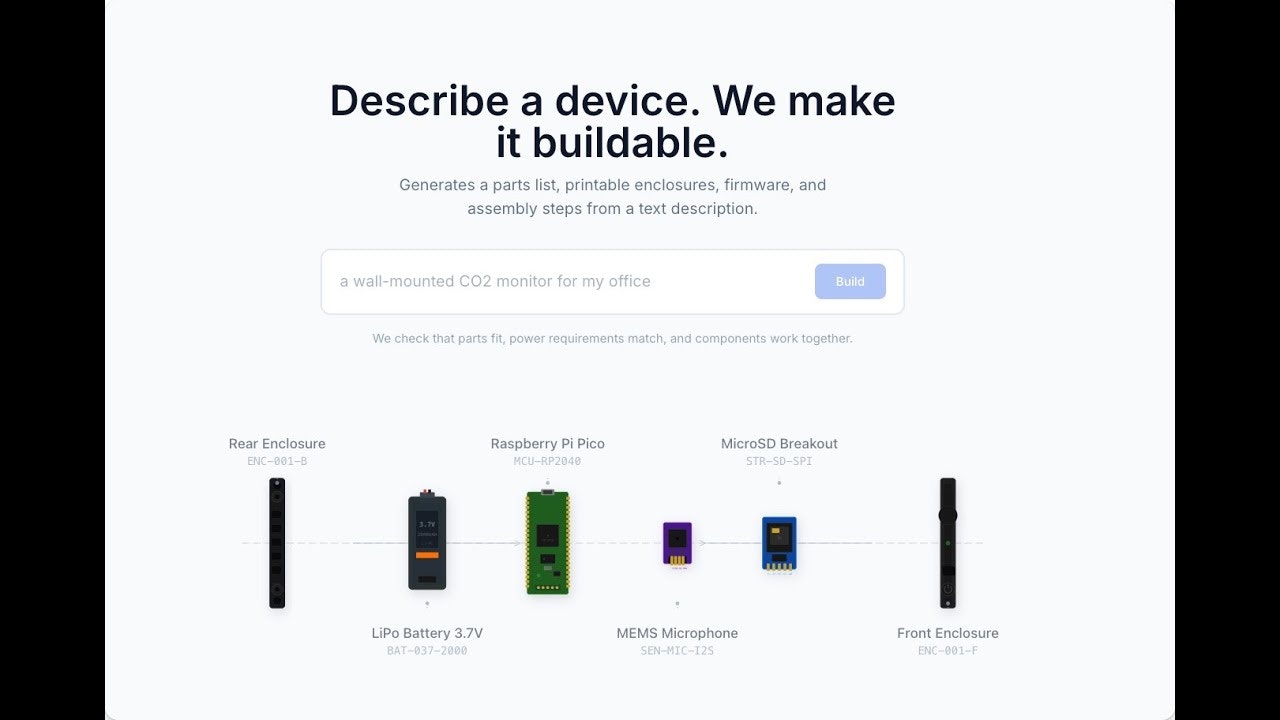
Modo is an ambitious new tool aiming to revolutionize the early stages of hardware development. Tagged as the solution to "Turn a hardware idea into a buildable prototype," Modo leverages generative AI principles to translate a simple text description of a desired electronic device into a comprehensive, ready-to-build package. For inventors, hobbyists, and early-stage hardware startups, this moves beyond mere schematic design and plunges directly into tangible creation.
The core function of Modo is to automate the tedious initial coordination required to bring an electronic concept to life. Instead of spending weeks researching compatible components, designing custom enclosures, and sketching out basic firmware structure, users input their vision, and Modo outputs a validated blueprint. This fundamentally changes the barrier to entry for hardware innovation, shifting the focus from sourcing logistics to core functionality refinement.
The target audience for Modo is broad, spanning independent inventors who need quick proof-of-concept models, educators looking for ready-made project structures, and even product designers seeking rapid iteration cycles on initial designs. Modo’s value proposition is clear: drastically reduce the time and technical debt associated with creating a first-pass, buildable prototype.
Problem & Solution: De-risking the Initial Build Phase
The most significant hurdle in early hardware development isn't necessarily the complexity of the final product, but the sheer friction involved in getting the first version assembled and powered on. This friction manifests as "analysis paralysis" stemming from component selection (will this sensor work with this microcontroller?), enclosure design (how do I mount these PCBs?), and the initial scaffolding of code necessary to prove the concept works.
Modo solves this by pre-validating these critical dependencies. By generating not just a parts list, but a collection of validated parts, it mitigates the risk of incompatibility that plagues beginner and intermediate builders. Furthermore, providing printable enclosures and firmware scaffolding addresses the two most time-consuming non-electronic tasks in prototyping. Where traditional CAD tools only handle enclosures and simulators only handle logic, Modo stitches the physical, electronic, and software elements together cohesively from the outset.
Key Features & Highlights: The Integrated Prototyping Suite
The power of Modo lies in its holistic output. It doesn't just generate one component; it delivers an integrated ecosystem ready for assembly.
The most notable features include:
- Validated Parts List: Ensuring that all suggested microcontrollers, sensors, and power components are known to work together effectively based on Modo’s internal knowledge base. This is a massive time-saver compared to searching component datasheets manually.
- Printable Enclosure Designs: Instantly available 3D model files (likely STL or similar) tailored specifically to house the suggested components, significantly speeding up mechanical integration.
- Firmware Scaffolding: This provides the necessary boilerplate code structure—GPIO definitions, basic initialization routines, and communication protocols—allowing the user to immediately focus on the unique logic of their device, rather than setting up the foundational framework.
- Step-by-Step Assembly Instructions: Bridging the gap between digital design and physical build, these instructions guide the user through connecting the validated parts and flashing the initial code onto the hardware.
From a user experience perspective, the simplicity of the input—a text description—is highly engaging. This AI-driven approach turns a highly technical endeavor into something accessible, lowering the initial cognitive load required to start building a physical device.
Potential Drawbacks & Areas for Improvement
While Modo presents a revolutionary approach to hardware prototyping, the complexity of real-world electronics means early iterations will inevitably face limitations. The primary potential drawback lies in the degree of customization achievable. If a user requires highly specialized or niche components not present in Modo’s validated library, the tool might force sub-optimal or generic solutions.
For advanced engineers, the provided "firmware scaffolding" might be too basic or, conversely, too opinionated in its coding style. An area for enhancement would be offering varying levels of scaffolding complexity—perhaps "Beginner (Arduino-style)" versus "Advanced (Bare-metal C/Rust)"—allowing users to tailor the code foundation to their expertise. Furthermore, ensuring that the Modo-generated enclosures are robust enough for field testing, rather than just desk testing, will be crucial for long-term adoption. Integrating compatibility checks for power consumption and thermal management within the initial validation step would add significant value.
Bottom Line & Recommendation
Modo is poised to become an indispensable tool for anyone looking to rapidly validate a hardware concept. It expertly tackles the logistical and integration headaches that typically bog down the first build phase of any electronic product.
If you are an aspiring hardware entrepreneur, a student tackling a complex engineering project, or a seasoned developer trying to quickly prototype a peripheral device, Modo offers a direct path from idea to tangible, testable prototype. Despite potential limitations in hyper-specific customization, the speed and completeness of its output package—validated parts, 3D printable housing, and starter firmware—make Modo highly recommended for accelerating the hardware innovation lifecycle. It’s a powerful demonstration of generative technology applied directly to the physical world.
Featured AI Applications
Discover powerful tools to enhance your productivity
MindMax
New Way to Interact with AI
Beyond AI chat, transforming conversations into an infinite canvas. Combining brainstorming, mind mapping, critical and creative thinking tools to help you visualize ideas, solve problems efficiently, and accelerate learning.
AI Slides
AI Slides with Markdown
Revolutionary slide creation fusing AI intelligence with Markdown flexibility - edit anywhere, optimize anytime, iterate easily. Turn every idea into a professional presentation instantly.
AI Markdown Editor
Write Immediately
Extremely efficient writing experience: AI assistant, slash commands, minimalist interface. Open and write, easy writing. ✍️ Markdown simplicity + 🤖 AI power + ⚡ Slash commands = Perfect writing experience.
Chrome AI Extension
AI Assistant Anywhere
Transform your browsing experience with FunBlocks AI Assistant. Your intelligent companion supporting AI-driven reading, writing, brainstorming, and critical thinking across the web.