Claude Opus 4.6 Review: The New Benchmark for Agentic AI and Deep Reasoning
Claude’s most advanced model for agentic tasks
发布时间: 2/6/2026
Product Overview
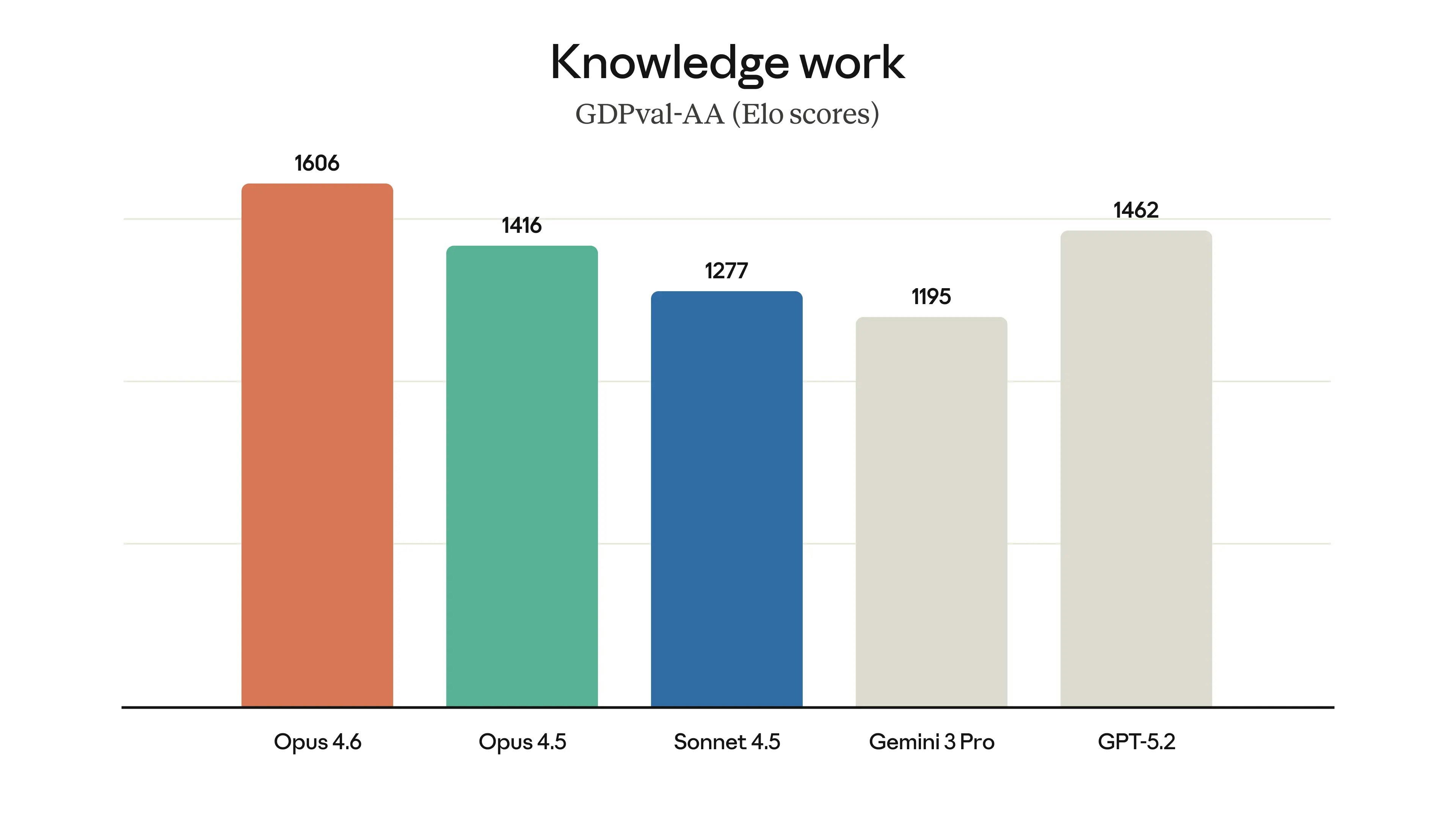
Claude Opus 4.6 arrives on the scene not just as an iterative update, but as a significant leap forward in Anthropic’s pursuit of highly capable artificial intelligence. Tagged as "Claude’s most advanced model for agentic tasks," Opus 4.6 is clearly engineered for complexity. This isn't just a chatbot; it's designed to be a reliable partner for substantial, multi-step computational work. Its core capability rests on its prowess in deep reasoning, complex planning, and executing long-running agentic workflows that mimic real-world project management.
This latest iteration targets power users, software developers, researchers, and enterprise analysts who demand consistent, high-fidelity output from their AI tools. The immediate standout is the massive 1M token context window, setting a new standard for handling extensive documentation, entire code repositories, or exhaustive research papers in a single prompt. Claude Opus 4.6 promises state-of-the-art performance where prior models might stumble due to context overload or weak planning capabilities.
The core value proposition of Claude Opus 4.6 is reliability under cognitive load. By integrating "adaptive thinking" and "improved planning," the model aims to move beyond simple instruction following toward true autonomous task execution, making it an essential tool for automating sophisticated workflows previously requiring significant human oversight.
Problem & Solution: Tackling Cognitive Overload
The primary problem facing advanced AI application development today is contextual drift and planning breakdown during long, complex tasks. Smaller context windows force users to constantly re-summarize information, leading to error accumulation and inefficiency when tackling large codebases or lengthy regulatory documents. Furthermore, many existing leading models struggle with multi-step agentic tasks, often failing the later steps because they lose sight of the initial, complex objective.
Claude Opus 4.6 directly addresses this through its expansive 1M token context window. This feature is transformative, allowing users to feed the model entire software projects or years of financial reports and ask for sophisticated synthesis or modification—all without truncation. The "improved planning" architecture is the crucial differentiator; it ensures that even lengthy tasks are broken down logically and adhered to, minimizing the risk of the model wandering off track. This positions Opus 4.6 to fill the gap for users requiring enterprise-grade reliability in complex, data-intensive analytical and coding environments.
Key Features & Highlights
The power of Claude Opus 4.6 is packed into several breakthrough capabilities:
- 1M Token Context Window: This is arguably the headline feature. Being able to process such a vast amount of information simultaneously is a game-changer for codebase analysis, document comparison, and in-depth legal or scientific review.
- Deep Reasoning and Adaptive Thinking: The model demonstrates a superior ability to connect disparate pieces of information within that massive context, enabling more nuanced insights and better problem-solving strategies than previous iterations.
- Agentic Task Execution: Optimized specifically for agentic workloads, Opus 4.6 excels at tasks requiring iterative action, self-correction, and maintaining state across many steps, making it ideal for automated workflows and testing environments.
- State-of-the-Art Coding Performance: For developers, the combination of deep reasoning and large context makes navigating and modifying extensive codebases significantly more accurate and efficient.
The user experience, particularly when dealing with large inputs, is noticeably smoother. Where other models might return fragmented or generic summaries for large datasets, Claude Opus 4.6 maintains specificity and relevance throughout the output, a direct result of its enhanced planning routines.
Potential Drawbacks & Areas for Improvement
While Claude Opus 4.6 sets a high bar, no model is without its limitations or areas ripe for development. The primary consideration for users will undoubtedly be cost and latency. Operating with a 1M token context window is resource-intensive, meaning access to Opus 4.6 will likely come at a premium price point compared to smaller, faster models. Users need to weigh the cost against the complexity of the task; not every query requires the full reasoning power of this flagship model.
From a feature perspective, while "adaptive thinking" is noted, clearer visibility into the model's internal planning steps could enhance user trust and debugging capabilities. Providing users with a structured, optional log detailing how Opus 4.6 broke down a complex task would be invaluable for highly regulated or safety-critical applications. Additionally, as it emphasizes agentic tasks, clearer integration pathways for standard workflow orchestration tools (like LangChain or dedicated internal APIs) would solidify its position as an enterprise platform component.
Bottom Line & Recommendation
Claude Opus 4.6 is a serious contender for the title of the most capable commercially available large language model for professional use. If your workflow regularly involves analyzing entire repositories, synthesizing vast amounts of research material, or executing long-running, multi-step agentic processes, you should prioritize testing Claude Opus 4.6 immediately. It effectively mitigates the context window limitations that plague so many advanced AI use cases.
For developers, researchers, and high-end data analysts, the investment in Opus 4.6 is likely justifiable given the potential time savings and reduction in human oversight required for deep, complex work. It sets a powerful new industry standard for what we should expect from our AI counterparts.
Featured AI Applications
Discover powerful tools to enhance your productivity
MindMax
与AI互动的新方式
超越 AI 聊天,将对话转化为无限画布。结合头脑风暴、思维导图、批判性与创造性思维工具,帮助你可视化想法、高效解决问题、加速学习。
AI Slides
AI 驱动幻灯片,Markdown 魔法加持
革命性幻灯片创作,融合 AI 智能与 Markdown 灵活性 - 随处编辑,随时优化,轻松迭代。让每个想法,都能快速变成专业演示。
AI Markdown Editor
打开即写 - AI驱动的Markdown编辑器
极其高效的写作体验:AI助手、斜杠命令、极简界面。打开即用,轻松写作。✍️ Markdown简洁 + 🤖 AI强大 + ⚡ 斜杠命令 = 完美写作体验
FunBlocks AI Extension
🚀 AI驱动的浏览器扩展
用FunBlocks AI助手改变您的浏览体验。您的智能伴侣,为网络上的AI驱动阅读、写作、头脑风暴和批判性思维提供支持。